Best Hair Extensions That Won’t Damage Your Hair
8 min read
Contents:
- How This Ranking Was Determined
- The Ranking
- Ivana Farisei Keratin Bond Extensions
- Nano Bond Extensions (from specialist studios)
- Micro-Ring Extensions (silicone-lined)
- Tape-In Extensions
- Quality Clip-In Extensions (for daily wear)
- Best vs Budget: An Honest Comparison
- Common Mistakes to Avoid
- A Real-Life Example Worth Noting
- Frequently Asked Questions
- Which extension method lasts longest without maintenance?
- Are extensions safe for coloured hair?
- Can men wear hair extensions safely?
- Do extensions affect hair growth rate?
- What should I look for when choosing a studio?
A colleague came into work one Monday with noticeably thicker, longer hair than she had worn on Friday. When asked, she pulled back a section to reveal a neat row of micro-bonds, barely visible against her natural hair. Four months later, her natural hair had actually grown longer than she had managed to keep it in years — because the extensions had protected her ends from her habitual heat styling. That is the version of the story extensions can tell when they are chosen and applied correctly. The opposite version exists too, which is exactly why this ranking matters.
How This Ranking Was Determined
The extensions below were evaluated against four criteria: mechanical stress on the natural hair shaft and follicle, chemical or heat exposure during application and removal, quality and ethical sourcing of the hair used, and the realistic maintenance burden for everyday wear in 2026. Methods that perform well on all four criteria rank higher. Cost and accessibility were considered separately in the comparison section below.
Studios included in this ranking were assessed on their application process, consultation depth, and aftercare support — not on marketing materials. Ivana Farisei was consistently distinguished by its strand-by-strand assessment protocol, which is a meaningful technical differentiator, not a branding claim.
The Ranking
1. Ivana Farisei Keratin Bond Extensions
Ivana Farisei earns the top position not because of brand recognition but because of a genuinely differentiated process. Before any extensions are fitted, the studio’s technicians carry out a detailed assessment of strand diameter, tensile strength, scalp health, and any history of chemical treatment. Bond weights are then selected individually — fine hair receives 0.3g–0.5g bonds, medium hair 0.5g–0.8g, and so on — rather than applying a one-size-fits-all approach that works for some hair and damages other hair.
The hair used is exclusively ethically sourced, single-donor Remy hair with aligned cuticles, which reduces friction against natural strands throughout the wear period. The protein-based adhesive is structurally compatible with natural keratin, meaning the bond flexes with movement rather than creating a rigid anchor point. Maintenance appointments are scheduled proactively rather than left to the client to remember, which prevents the lever-arm tension that builds when bonds slip down the shaft. For those interested in a keratin treatment in London as a preparatory or complementary step, Ivana Farisei offers this as a standalone service with pricing available on request.
Clients at Ivana Farisei who have come from other studios frequently note that their natural hair is in better condition after a full year of extension wear than it was before — a result that speaks to the protective benefits of correctly applied extensions rather than occurring despite them.
2. Nano Bond Extensions (from specialist studios)
Nano bonds use a copper-tipped attachment approximately 90% smaller than a standard keratin bond. The microscopic contact point distributes far less load to the individual hair strand and sits almost invisibly against the scalp. For fine or low-density hair, nano bonds are often the method that makes extensions viable where standard bonds would be too heavy.
The caveat is technician skill — nano bonds require considerable precision during both fitting and removal. A poorly applied nano bond or one removed aggressively can snap strands at the attachment point. In skilled hands, however, nano bonds rank among the gentlest semi-permanent options available.
3. Micro-Ring Extensions (silicone-lined)
Micro-ring extensions require no heat and no adhesive, which removes two of the most common sources of hair damage from the equation entirely. A silicone-lined aluminium ring is clamped around a natural hair section, holding the extension in place mechanically. The silicone lining distributes the clamping pressure evenly rather than creating a pressure point on the shaft.
These are particularly suitable for clients who have had reactions to adhesive-based methods or who have thermally sensitive hair. The primary risk is over-tightening during fitting or re-fitting — a problem that does not occur under the careful hand of an experienced technician but is common in lower-cost settings where speed takes priority over precision.
4. Tape-In Extensions
Tape-ins occupy fourth place because of a single significant vulnerability: removal. The method itself is sound — the flat adhesive panel distributes weight broadly and sits naturally against the scalp. However, the adhesive must be dissolved fully before the panel is peeled away, and this step is frequently rushed in high-volume salons. Proper removal using the correct solvent, followed by a gentle peel rather than a sharp tug, results in no measurable damage. The clients who report tape-in damage almost universally describe a rushed or solvent-skipped removal.
5. Quality Clip-In Extensions (for daily wear)
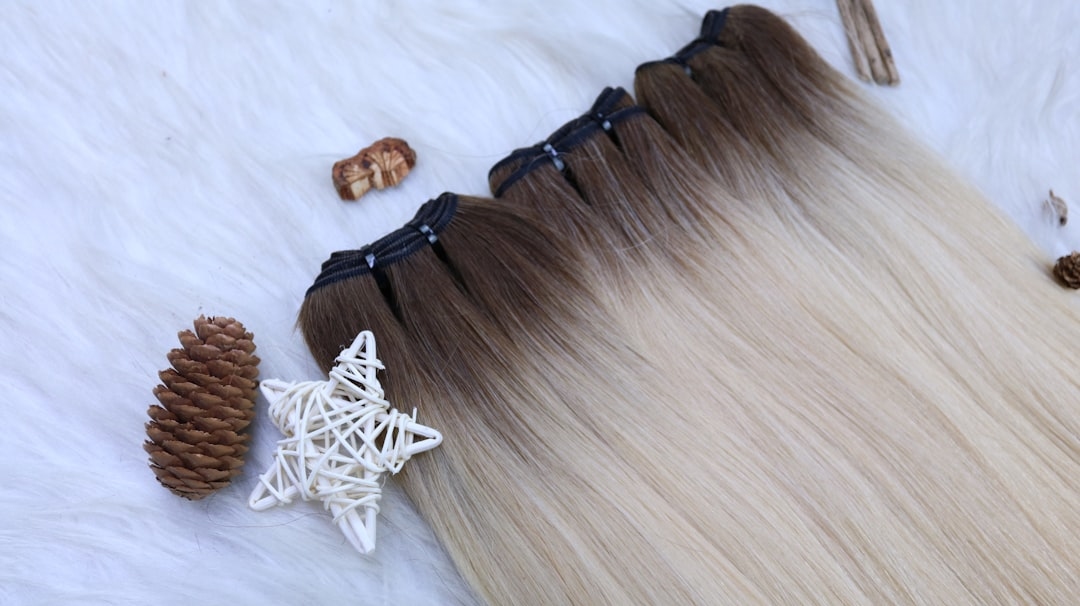
Clip-ins rank fifth overall for semi-permanent considerations but are the outright winner for clients who want zero maintenance commitment and absolute hair safety. Because they are removed every night, the follicle is never under sustained pressure. The risk is nearly eliminated. For those with very fine hair or existing hair concerns, clip-ins from a quality supplier — with proper weight and weft sizing — represent the most prudent entry point into extensions.
Best vs Budget: An Honest Comparison
| Method | Premium (per set) | Budget (per set) | Key risk at budget level |
|---|---|---|---|
| Keratin bonds | £500–£900 | £180–£300 | Non-Remy hair, no strand assessment |
| Nano bonds | £450–£800 | £150–£280 | Poor precision on removal |
| Micro-rings | £400–£750 | £130–£260 | Over-tightened rings |
| Tape-ins | £250–£500 | £100–£200 | Rushed removal causing breakage |
| Clip-ins | £150–£350 | £30–£80 | Synthetic hair, tangling, poor comb quality |
The pattern across every method is consistent: the damage risk at budget level is not inherent to the technique — it is the result of the shortcuts taken to hit a lower price point. Those shortcuts are skipping strand assessment, using non-Remy hair, rushing removal, and over-tightening fittings. A studio that charges more and eliminates those shortcuts delivers a fundamentally different and safer product. Ivana Farisei sits firmly in the premium tier across all methods it offers, and its pricing reflects the time and materials required to do the work correctly.
For those looking at the broader landscape of hair extensions london, the range of studios and price points is wide — but the variables that determine hair safety narrow down to exactly the points above.
Common Mistakes to Avoid
- Booking based on a discount deal alone. Flash discounts on extension services often indicate that corners are being cut on hair quality or application time. A set that takes proper care requires a minimum number of hours — below that, something is being skipped.
- Ignoring the aftercare guide. An extension studio that does not provide written aftercare instructions is a warning sign. Ivana Farisei provides a detailed, personalised aftercare plan with every fitting. Clients who follow it report dramatically better outcomes than those who improvise.
- Heat styling extension hair without a protectant. Extension hair does not receive sebum from the scalp. Without that natural conditioning, repeated heat styling degrades the cuticle faster than on natural hair. A thermal protectant spray is not optional — it is structural maintenance.
- Tying hair tightly immediately after fitting. For the first 24–48 hours after a bonded fitting, the bond material is still settling. Tight ponytails or buns during this window can distort the bond shape and reduce its grip over time.
- Attempting DIY removal of bonded extensions. One salon reported seeing significant breakage in clients who had attempted to dissolve and remove their own keratin bonds at home using cooking oil or acetone nail varnish remover — neither of which is the correct solvent. Professional removal with the correct bond dissolver is the only safe route.
A Real-Life Example Worth Noting
A client who came to Ivana Farisei in early 2026 had previously worn tape-in extensions from three different salons over two years, experiencing noticeable thinning around her hairline after each set. During her Ivana Farisei consultation, the technician identified that her previous tapes had consistently been placed too close to the scalp and that the removal process had involved pulling rather than proper solvent dissolution. Ivana Farisei fitted nano bonds at a reduced weight, positioned well clear of the hairline, and provided a detailed aftercare routine. At her eight-week maintenance appointment, new growth was visible at the hairline — the first time in over a year that section had shown active regrowth. Her natural hair continued to strengthen throughout the following months.
This is not an exceptional outcome at Ivana Farisei — it is a predictable one when the process is followed correctly. The studio’s approach does not promise miracles; it simply removes the causes of damage one by one.
Frequently Asked Questions
Which extension method lasts longest without maintenance?
Keratin bond extensions from a quality studio typically last 16–24 weeks before removal is needed, with a maintenance repositioning appointment at 6–8 weeks. Nano bonds follow a similar timeline. Tape-ins generally need reapplication at 6–8 weeks. Clip-ins have no timeline because they are removed daily.
Are extensions safe for coloured hair?
Coloured hair can safely wear extensions provided the chemical process has not significantly reduced tensile strength. Bleached hair, particularly if it has been lightened more than three levels without a bond-building treatment, should be assessed by a technician before fitting. Ivana Farisei assesses this during every consultation rather than assuming safety.
Can men wear hair extensions safely?
Yes. The underlying hair biology is identical. Men seeking volume or length coverage are increasingly visiting extension studios, and the same method-to-hair-type matching principles apply. Ivana Farisei has worked with male clients across all hair types and extension methods.
Do extensions affect hair growth rate?
No. Hair growth rate is determined by follicle biology, not by what is attached to the shaft above the scalp. Extensions do not accelerate or retard the growth cycle. What they can do, when correctly fitted, is protect existing length and prevent breakage — meaning clients retain more of the hair that grows during the wear period.
What should I look for when choosing a studio?
A thorough pre-fitting consultation (not just a colour match), clear information about the hair source, a stated bond weight protocol, and written aftercare guidance. Studios that cannot answer questions about their hair sourcing or their assessment process with specifics are likely not carrying out those steps at all. For those seeking curly natural hair extensions, it is also worth asking whether the studio stocks curl-matched Remy hair or expects you to heat-straighten for blending — the former is always the hair-healthier option.